
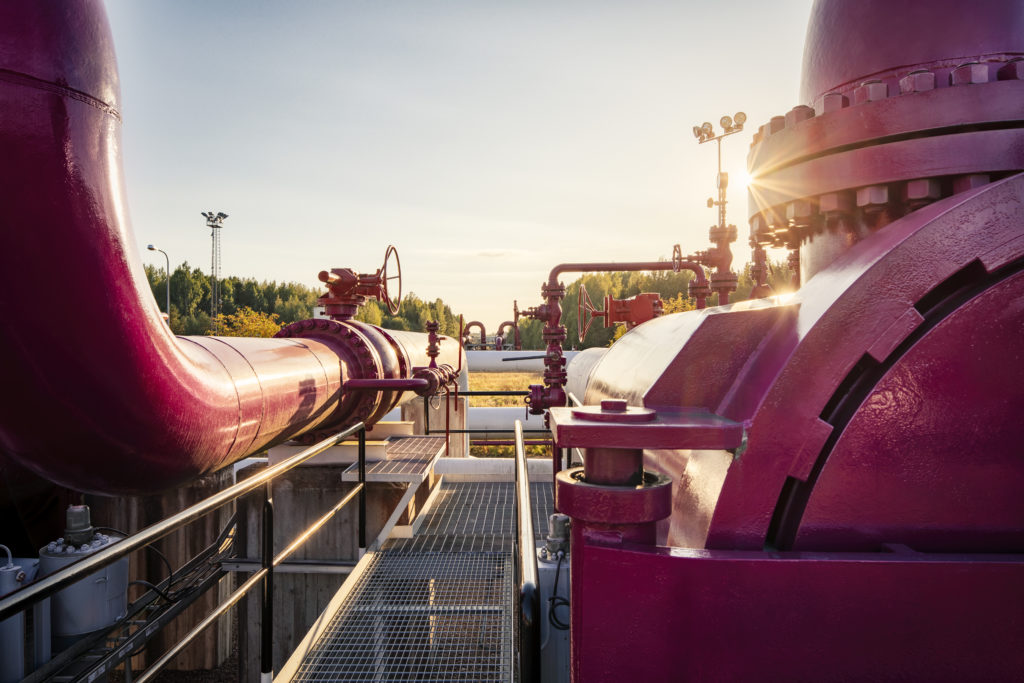
A key concern in construction of the hydrogen infrastructure is pipeline durability. Hydrogen is a small molecule gas and is known to cause embrittlement in materials – but can hydrogen also embrittle the carbon steel pipelines in which there are plans to transport it?
Pessimistic scenarios have already begun to paint a picture of the need to develop completely new steel grades for hydrogen pipelines or the project won’t work. Expensive steel development could slow down the creation of a hydrogen infrastructure in Finland – and cause costs to skyrocket.
Marko Ikävalko, Head of Operations and Maintenance at Gasgrid, says that there is experience from around the world of hydrogen transmission in steel pipelines – and hydrogen embrittlement has not been found to be a problem if choice of the pipeline material takes into account the properties of hydrogen and the operating conditions.
“Factors to be taken into account in the transportation of hydrogen include the maximum pressure used in transmission, pressure fluctuations and the flow rate,” Ikävalko notes. The existing natural gas transmission pipeline could also be used to transport hydrogen to some extent with certain limitations/restrictions.
Recent results from the Centre for Advanced Steels Research at the University of Oulu confirm information from the field: modern carbon steel pipes are suitable for hydrogen usage.
Effect of hydrogen on materials depends on many factors
Nevertheless, care must be taken with hydrogen since how it affects materials depends on many things – in the case of steels, in addition to pressure, factors such as microstructure, grain size, alloying elements and operation temperature affect. The durability of hydrogen pipelines and hydrogen tanks in cold Nordic conditions is naturally one research topic.
Hanna Kinnunen, Development Manager RDI & technology at Gasgrid, confirms that understanding the phenomena caused by hydrogen in materials, such as the effects on the mechanical properties and fracture toughness of steel, is essential in the hydrogen development project. There is already much information available which has been channelled into international standards, the most comprehensive of which currently is the US standard ASME B31.12.
“Updated in 2023, the regulations and recommendations in the ASME B31.12 standard are based among other things on hydrogen embrittlement and how it affects materials,” Kinnunen says.
“ASME B31.12 is an important standard also because it addresses and guides both design and operation,” Marko Ikävalko adds.
Steel grade for the hydrogen infrastructure still being studied
Gasgrid is yet to determine the most appropriate steel grade for the hydrogen infrastructure.
“This has not yet been decided. We will study the matter thoroughly before making the actual decision,” Ikävalko says. Once the steel grade has been chosen, the project will move forward by one important step.
“The choice of material will affect operational use throughout the entire lifecycle,” Ikävalko points out. Factors such as the hydrogen transmission capacity and the properties of alternative steel grades in different operating conditions must be considered when selecting the optimal pipeline material. The design basis is safe use throughout the lifecycle.
“In this respect, we are evaluating the optimal steel grade, which doesn’t differ to what we do in Gasgrid’s conventional infrastructure construction,” Ikävalo says, adding that a safety-driven lifecycle approach is the key factor in each phase of the project.
Uniform, welded pipeline does not leak
Common sense says that no matter how robust a hydrogen pipeline is, the biggest question marks are the joints and welding seams: will they hold in all possible conditions? Ikävalko points out that hydrogen is a well-known gas from the process industry, where there is a lot of user experience and applicable solutions available.
“All pipeline joints used will be suitable for use with hydrogen,” he says.
Gasgrid’s policy is that an integral, welded pipeline does not leak.
“The basis is that the pipeline is so well constructed that there are no leaks. Supervision and monitoring will then ensure that everything goes according to plan,” Ikävalko says.
“At the same time, Gasgrid continuously uses the best available knowledge and research results in the field in its own design work for the infrastructure projects,” Hanna Kinnunen adds.
“The use of new research in infrastructure design is important for us,” Kinnunen says.
—
Research project establishes safe hydrogen transportation infrastructure in Nordic countries
- The MatHias project (Material and Structural Integrity Assessment for Safe Nordic Hydrogen Transportation Infrastructure) is part of the Nordic Hydrogen Valleys programme. The research project seeks to entrench a safe hydrogen transportation infrastructure in the Nordic countries. The MatHias project is being coordinated by the Norwegian research organisation SINTEF. Besides Gasgrid, other participants from Finland are VTT Technical Research Centre of Finland, the University of Oulu and SSAB.
- The MatHias project started in 2023 and is studying in particular the durability and integrity of steels for hydrogen pipelines and structures. Hydrogen can cause steel embrittlement, which increases the risk of pipeline fracture, especially in cold temperatures in the Nordics.
- “The MatHias project is an important project from the Nordic perspective, and there is great interest in its findings and research results,” says Hanna Kinnunen at Gasgrid. “The project evaluates and compares the properties of various pipeline steels, developing methodologies to assess the pipeline lifetime and choice of appropriate steel grades. MatHias is just one example of ambitious research being conducted in the field of hydrogen,” Kinnunen adds. Investments in RDI are strong and increasing all the time.
Read more: