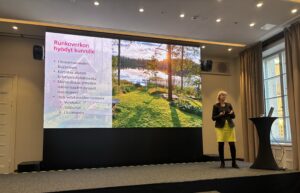
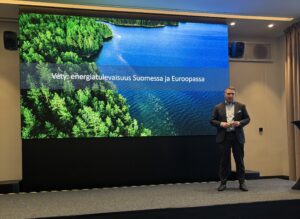
During the autumn, Gasgrid held a total of nine discussion events related to the local development of the hydrogen infrastructure along the planned national hydrogen infrastructure route. Municipal representatives, local businesses and the local media took part in the events. Gasgrid announced an updated national hydrogen infrastructure route at Gasgrid’s Future of Gases stakeholder event on 27 November.
The regions have a significant role in the development and use of the national hydrogen infrastructure. During the autumn, Gasgrid, together with municipalities, regions and businesses, held a series of events to discuss the first hydrogen infrastructure route plan and to hear feedback from actors involved in the hydrogen economy. The objective of the discussion events was to improve awareness and to encourage regional actors to participate in the development of the hydrogen economy and infrastructure.
“Finland’s hydrogen infrastructure will not be built alone but together. The discussions held with regional actors on the hydrogen roadshow were productive and provided us with valuable feedback for hydrogen infrastructure development. We encourage all actors involved in the hydrogen economy to communicate the opportunities and needs of the hydrogen economy going forward, since work continues on development of the hydrogen infrastructure,” says Erkka Saario, Senior Vice President, Hydrogen Development at Gasgrid Finland.
Regions have their own strengths in the hydrogen economy
The national hydrogen infrastructure will be built in phases. The national hydrogen infrastructure plan now made has taken account of the characteristics and strengths of the regions, including existing energy production, the electricity grid, methane and logistics infrastructures. In addition, planning has benefited from feedback from regional actors and the feedback in Gasgrid’s market consultation from actors involved in the hydrogen economy.
“The plan now proposed is the first phase and work on developing the hydrogen infrastructure continues. Expansion of the transmission infrastructure to areas where the need arises for transmission and development can be explored later. The activity of regional actors in communicating these needs is of particular importance. The hydrogen economy seems different in different parts of Finland: even though the route may not at the moment pass through a region, there are already many ways for regions to get involved in the hydrogen economy now. We encourage regions to explore their own strengths as part of the hydrogen economy,” says Heli Virkki, Head of Hydrogen Valley Development at Gasgrid.
Similar regional reviews will also be carried out related to the methane and carbon dioxide infrastructure in 2025. These will review, for example, whether the methane infrastructure can be further expanded and what role a potential CO2 infrastructure could have in this context.
The next step in the national hydrogen infrastructure route plan is for municipalities on the route to be able to give their comments on the planned route. Likewise, work with market consultation and regional discussions with municipalities and actors will continue. The goal is to launch an environmental impact assessment (EIA) programme during 2025. Regional planning of the hydrogen infrastructure will start at the same time, focusing on examining connections of the first areas and plants. Gasgrid’s ambition is for the hydrogen infrastructure to be up and running in the first half of the 2030s.
The market consultation for actors connecting to the hydrogen economy is still open and Gasgrid encourages actors to respond to it. Respond to the market consultation here.
Watch the 27 November 2024 recording of the Future of Gases: Vetyvarma Suomi event here.