
Energy experts flocked to the Future of Gases hybrid seminar in Helsinki to hear what building blocks will be used to create a stable, sustainable and smart energy system of the future – and what role will gases play in it? The event, hosted by Gasgrid on May 27, 2025, sought solutions on how gases can support security of supply, market orientation, cost-efficiency and, of course, overall competitiveness in the energy system.

In his opening remarks, Gasgrid CEO Olli Sipilä outlined the core issue: energy systems are now evolving at an unprecedented pace and on a historic scale.
– Finland is in an excellent position to solve this equation. We have the opportunity to be truly bigger than our size, Sipilä stated.
Leena Mörttinen, Undersecretary of State at the Ministry of Finance, agreed with Sipilä’s assessment.
– We have a large country that can accommodate Green Transition investments and which possesses, for example, wind and nuclear power for industrial needs. It is the rest of Europe that faces more challenges, Mörttinen said.
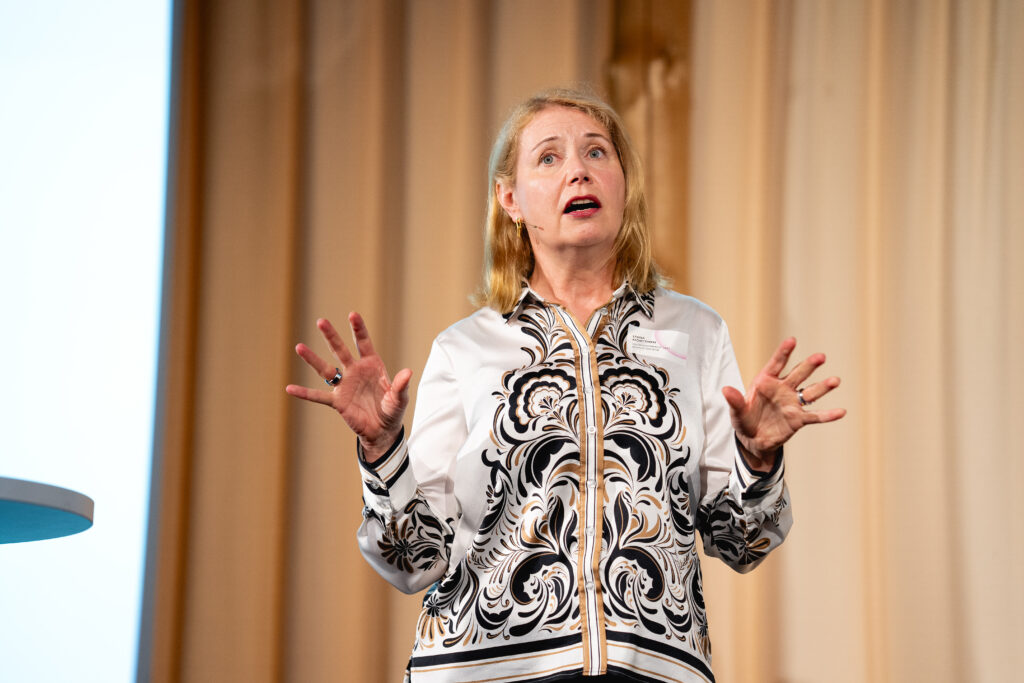
Finland should not give up its competitive advantage in energy
Jukka Leskelä, CEO of Finnish Energy, commented that the changes planned for current legislation are hardly improvements. According to Leskelä, power grids in Finland, for example, will soon face neglect, and municipalities will not be allowed to zone wind power in any sensible way.
– Strengths must be bolstered, not weakened. We must understand why we are in a good situation and hold on to that, Leskelä said.
Leskelä would like to see an energy system that is integrated wisely: a cross-border system built on common operating models to nurture stability and resilience.
– We really should commit to creating growth that is based on the Green Transition, Leskelä concluded.
Finnish and Estonian energy cooperation is unparalleled
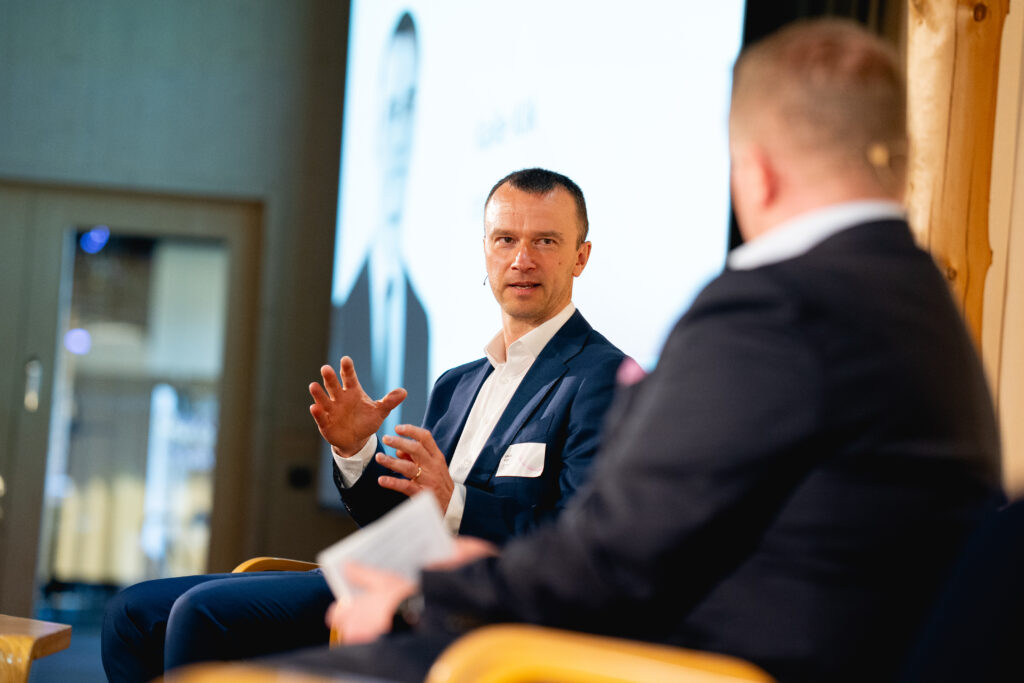
Kalle Kilk, CEO of Elering, which manages Estonia’s power and gas infrastructure, discussed the importance of cross-border collaboration, as well. According to Kilk, a small country needs cooperation in the energy sector if it wants to make it.
– Regarding gas, we have cooperation between Finland, Estonia and Latvia that is unique on a European scale, Kilk said.
Industry needs an energy system that works
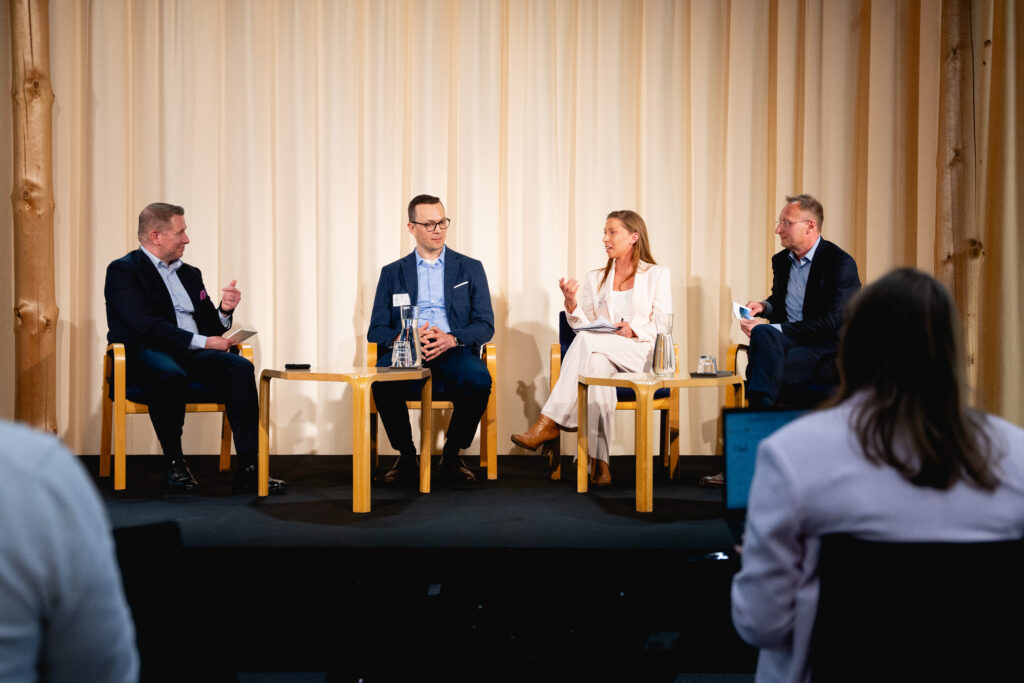
But what technologies and innovations does a smart, stable energy system need from the perspective of big industrial players? – This was the topic of the panel discussion which featured Director Nette Lehtinen from Wärtsilä, Director Petri Köykkä from Valmet and CEO Henrikki Talvitie of St1.
Talvitie pointed out that the energy system must be designed and modeled as one functional entity. According to Talvitie, however, the roadmap to a low-carbon world is still in its infancy, as some key tools are missing.
– We are now in a situation where fossil energy is needed in order to produce more of that renewable energy, Talvitie stated, referring, for example, to the use of natural gas as a balancing force in electricity production during peak consumption.
– One must be able to say this out loud, he added.
Better balance with gas–turbine power plants
Wärtsilä is a pioneer in the use of balancing technology. According to Nette Lehtinen, the attitude towards turbine power plants has changed from baseload energy production to balancing production.
– This change has occurred precisely as a result of the use of natural gas.
Valmet’s Petri Köykkä observed that automation already plays a major role in the development of energy systems – it delivers the critical controllability and continuity that is always required. Artificial intelligence is in the cards, too.
– These automation platforms contain a lot of data that can be processed onwards using artificial intelligence.
Climate change forces energy systems to renew themselves
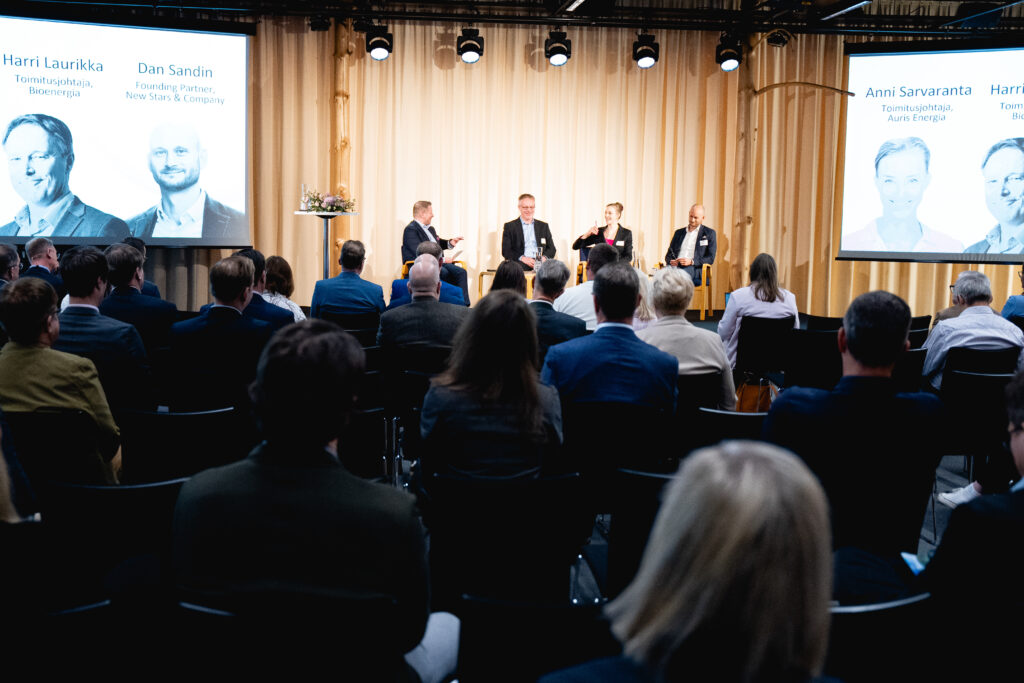
The second panel of the day focused on the state of the energy systems from the perspective of the sector players. Anni Sarvaranta, CEO of Auris Energia, pointed out that energy systems are not being retooled just for the fun of it, but because of climate change. However, the big picture can become blurred since each actor has their own interests to pursue. Sarvaranta stated that change is, indeed, needed, but it must be managed wisely.
– For the energy sector, this presents a billion-euro opportunity to figure out how to institute change together, without constantly arguing amongst ourselves.
Biogas production to double in the coming years
Founding partner Dan Sandin of New Stars & Company believes that stability must be harvested from many different sources: it is not just a question of the energy system, as such, but also of how that system is managed.
– Long-term persistence and determination are key here.
Harri Laurikka of the Finnish Bioenergy Association stated that the outlook for biogas, for example, is very bright.
– Over the next three years, investments will be made in the biogas sector that will perhaps even double the current production.
According to Laurikka, the capture, use and storage of CO2 are also an essential part of achieving the EU’s climate goals, and biocarbon is an emerging area where investments are small but growing.
Perfect energy system is rooted in system understanding
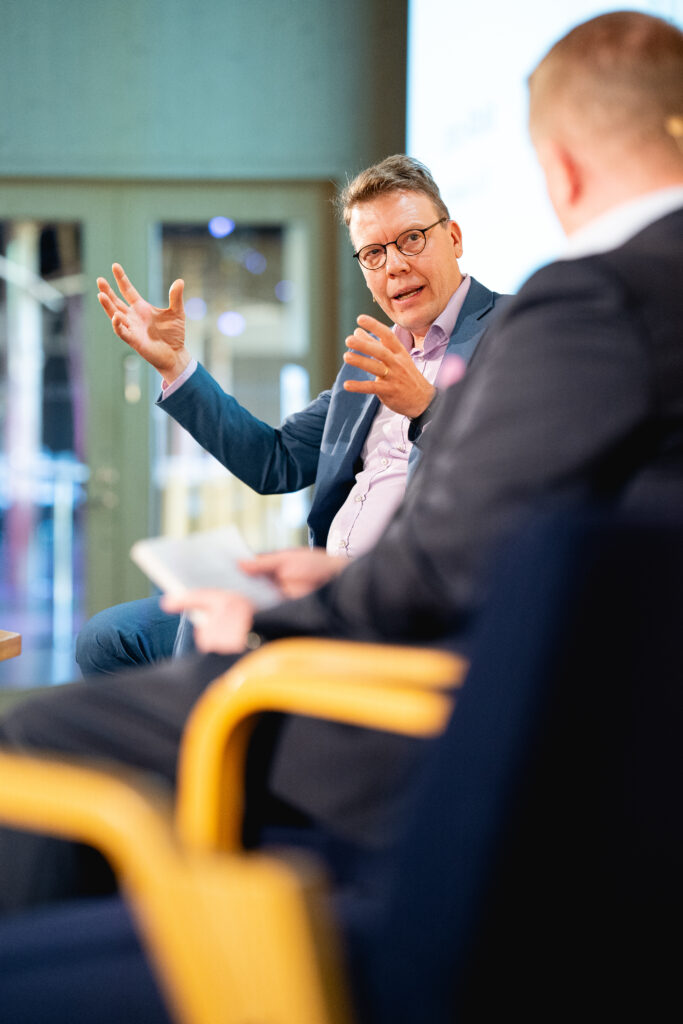
A changing, successful energy system involves many building blocks. According to Jero Ahola, Professor of Energy Efficiency at LUT University, an energy system needs adjustability and flexibility to serve as the glue between actors.
Ahola also emphasized the importance of understanding the system, which Gasgrid’s Sipilä fully supported: the direction is from individual silos towards total integration.
– The necessary technologies already exist, Ahola said.
However, the challenge is far from easy, added Sipilä in his closing remarks.
– Every single piece is needed and must be firmly glued together to make it work.
Read more
Estonia wants more gas-fired power plants
Text: Sami J. Anteroinen
Pictures: Miika Kainu