
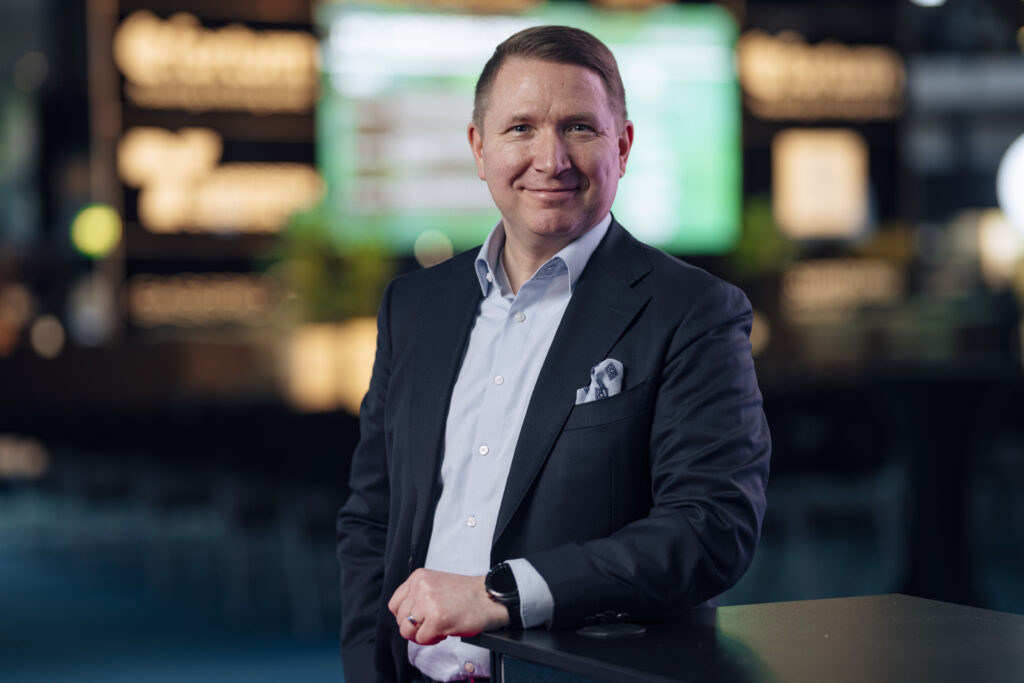
The concept of strategic resilience has become a permanent feature of the current energy sector debate. Olli Sipilä, CEO of the Finnish gas transmission company Gasgrid, states that forward-looking hydrogen investments contribute to the building of a more sustainable economy and a more robust nation.
In the field of energy, strategic resilience means that a country can deal with even the most exceptional circumstances. Such strength does not arise by chance, but, instead, requires long-term investment in self-sufficiency and preparedness, as well as the ability to keep asking: “What if…?”
– I would assess that the Baltic Sea and North Sea regions are in a particularly good position, in terms of strategic resilience, from the perspective of energy and raw material self-sufficiency. All the necessary, competitive resources can be found right here, Sipilä reflects.
According to Sipilä, in practice this means that while one particular region may have wind power assets, another region may have hydrogen production, for example. In addition, there must be industrial clients for hydrogen and its derivatives.
– Gasgrid is supporting Finland’s resilience and security of supply by building a sustainable energy system that ensures the availability of energy under any circumstance.
Markets can yet be found in unexpected directions. How long will it take, for example, until synthetic aviation fuel burns in the fuel tanks of European fighter jets – certainly a great added value product from a resilience perspective?
– This is but one example of what is possible in the future, Sipilä says, adding that technically there is already readiness to move on this.
Hydrogen is needed where electrification does not work
According to Sipilä, the Hydrogen Economy goes hand in hand with electrification. Both are needed, he says.
– There are still industries that find it difficult to use electricity rather than gases. When we have clean hydrogen made from renewable energy –as well as the further refined products – fossil fuels are replaced, just like with clean electricity, Sipilä points out.
Despite struggling in the throes of the 2022 energy crisis, Finland managed to implement the crucial Inkoo LNG terminal project quickly and decisively, an effort led by Gasgrid. For Sipilä, the success of the LNG terminal project provided an eye-opening reminder of the importance of having actual, physical assets in the energy sector.
– No plan or strategy can heat homes, charge mobile phones, or produce the chemicals that keep our drinking water clean. Only genuine assets and infrastructure can accomplish this, Sipilä says.
Finland is superbly positioned for clean hydrogen production
Sipilä believes that Finland is exceptionally well-positioned as a manufacturer of clean hydrogen that is produced from renewable energy.
– Finland is one of the most competitive countries when it comes to producing clean hydrogen, he points out.
Competitiveness is built on a few key elements. First of all, Finland has an efficient, low-emission energy system, which also provides a solid foundation for future growth.
– We have an overall energy system that is both reliable and balanced. We produce clean electricity for industrial use, and this is of great interest to international investors.
Secondly, renewable energy sources, primarily wind power, will be used to produce clean hydrogen in the future. According to Sipilä, Finland’s greatest economic growth potential in the 2030s is based on harnessing renewable energy and turning it into high-value investments.
– The Hydrogen Economy and its derivatives, such as e-methanol and e-ammonia, are significant drivers of this new growth. The international competition out there is fierce, but we have a great shot to make it.
Hydrogen network planning gains momentum
The third key competitive issue is infrastructure: the Finnish hydrogen network project, spearheaded by Gasgrid, covers over 1,300 kilometers of hydrogen pipeline.
– We already have this much in the permitting process, which contributes to the rapid scalability of hydrogen production and reduces the risk of serious disruptions, Sipilä analyzes. The relatively fast permitting processes actually constitute another Finnish strength in the hydrogen arena.
According to a recent Gasgrid market survey, parties interested in producing clean hydrogen have estimated that they will produce as much as 13 gigawatt-hours of hydrogen in the first phase, which is a very impressive figure if the plan is realized. At the same time, Gasgrid wants to link together all the “Hydrogen Valleys” of the future. They operate locally in interaction with hydrogen producers, consumers, and other actors in the same value chain. This allows all synergies in the hydrogen economy to be actively utilized.
Therefore, there is already a very attractive business case laid out for international investors. According to Sipilä, in the future, we will hopefully see a low-risk, high-predictability market, where infrastructure is developed in the long term. International cooperation will also improve the development of the downstream hydrogen industry in Finland.
– The essential question is: how do we move from goals to concrete actions that bring real impact? Gasgrid is ready to facilitate cooperation and create synergies to get the market moving.
Lead markets are critical growth engines
For hydrogen to gain a foothold in Europe, strong anchors are needed. Europe still imports 50-60 percent of its energy, mainly as fossil fuels. Sipilä emphasizes the creation of lead markets in critical areas:
– Hydrogen is well suited to sectors where it is difficult to replace fossil raw materials with electricity and where the product must be available without interruption, around the clock, and year-round. Demand for clean hydrogen is now being created precisely in these lead markets, which point the way for the evolution of the entire hydrogen market.
According to Sipilä, being an industry forerunner is not always easy, but an early bird investor can benefit significantly in this situation.
– Sometimes we forget this lesson. As the market will stabilize in the late 2030s, the hydrogen ecosystem has become mainstream, and such opportunities for trailblazers are no longer available. The best opportunities are out there right now, as investment conditions continue to improve and the market scales up.
Sipilä makes a reference to natural gas development in Norway: 50 years ago, the natural gas sector in Norway was practically non-existent.
– Today, it is a very large economic sector, bringing in very large export revenues and providing a solid strategic position for Norway as it guarantees, for its part, Europe’s self-sufficiency, competitiveness, and resilience. Finland has the potential for similar development.
Read more:
Poll: What do you expect from the hydrogen market?
Text: Sami Anteroinen Photos: Eino Ansio