
The second Hydrogen Summit & Expo gathered clean hydrogen enthusiasts in Tampere, Finland, in January 2026. Gasgrid participated in the overall discussion on the development of the hydrogen economy. One of the key checkpoints on the European hydrogen roadmap is the Nordic-Baltic Hydrogen Corridor, stretching from Finland to Germany.
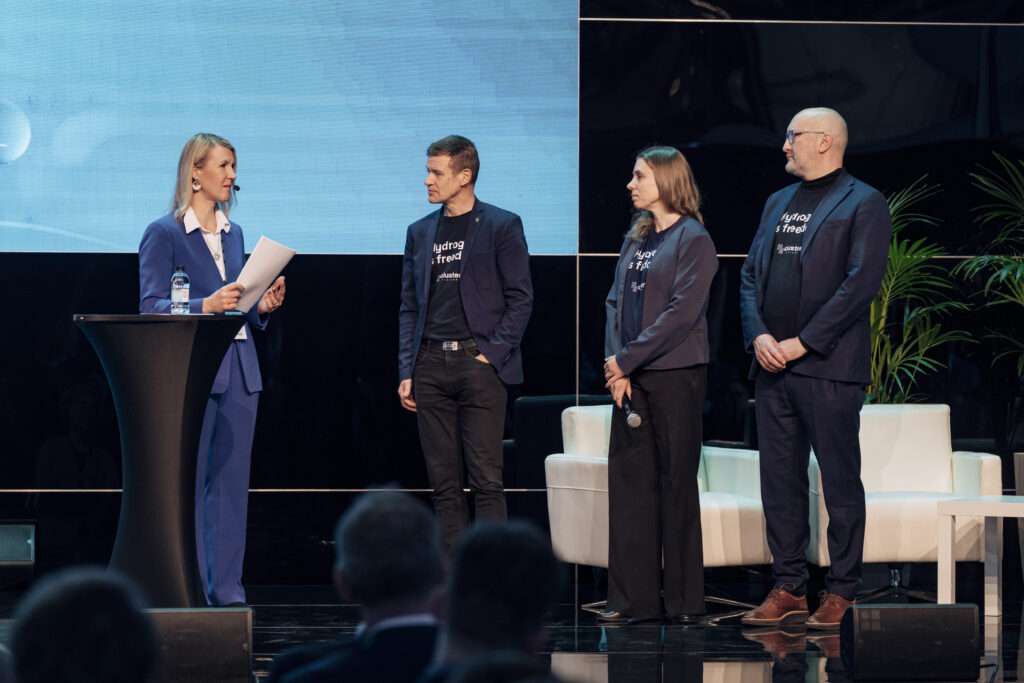
Speaking at the event, Sari Multala, the Finnish Minister of the Environment and Climate, stated that the current situation in hydrogen development is quite solid. The initial “hype phase” has been passed, and now we are moving decisively towards building a continent-wide hydrogen system.
The presentations at the Summit & Expo painted a positive picture of the possibilities surrounding hydrogen. Investments related to the production of clean hydrogen are increasing around the world, and recently, for example, China, India, Japan, and South Korea have invested significantly in hydrogen.
There were lively discussions at the Gasgrid stand. These interactions reiterated the importance of the European cross-border hydrogen network from the perspective of clean transition, regional vitality, and, taken more broadly, also society as a whole. Beyond pure energy concerns, hydrogen can be seen as an opportunity to boost both resilience and economy, which will have a positive impact on the future of Finland and Europe, too.
Hydrogen corridors will soon connect Europe
Cooperation between countries is critical in building a European hydrogen economy. Indeed, hydrogen corridors are emerging all around Europe, connecting countries and markets alike. At the Summit & Expo, an interesting update was given on how one of these projects, the Nordic-Baltic Hydrogen Corridor (NBHC), is progressing.
NBHC is a joint project involving six European gas transmission system operators (TSOs): Gasgrid (Finland), Elering (Estonia), Conexus Baltic Grid (Latvia), Amber Grid (Lithuania), GAZ-SYSTEM (Poland), and ONTRAS (Germany). The NBHC project aims to diversify the European energy system, accelerate the integration of renewable energy, develop the market, and fortify energy security.
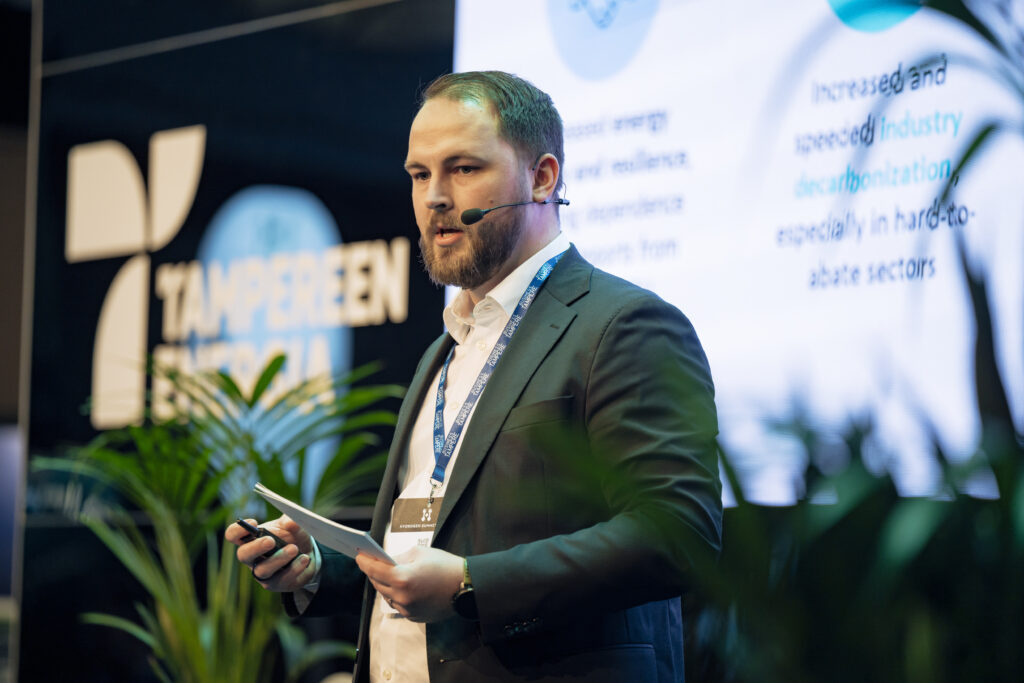
Joonas Laitila, leading the NBHC project at Gasgrid’s end, moderated the panel discussion, which included news about the progress of the project from Finland, Lithuania, and Germany. In his opening remarks, Laitila stated that the project is on track for Finland and that cooperation between the various parties keeps intensifying.
– The feasibility phase of the project is now underway. Initially, the focus is more on the technical aspects of the pipeline, and then, we move on to commercial assessment.
NBHC is an ambitious hydrogen infrastructure project involving six countries
The NBHC project will build a hydrogen transmission pipeline between Finland, Estonia, Latvia, Lithuania, Poland, and Germany. The main idea of the project is to promote the resilience of the energy system as well as to support renewable energy and energy self-sufficiency in the Baltic Sea region, in accordance with the EU hydrogen strategy.
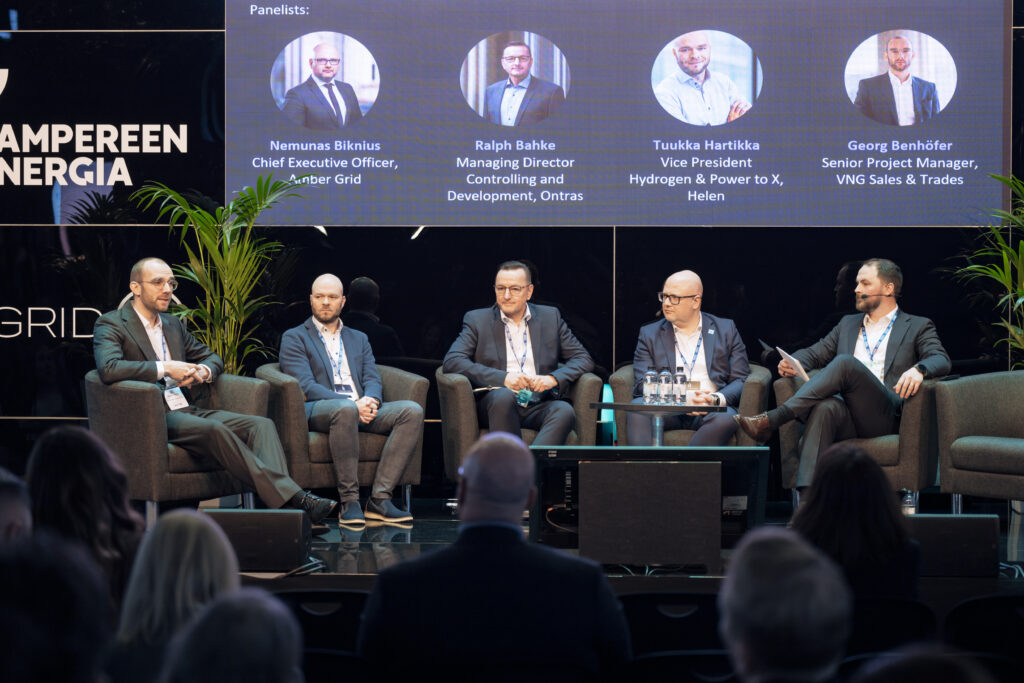
Germany has been converting its existing natural gas network into a hydrogen network. Ralph Bahke, CEO of the German gas transmission company ONTRAS, confirmed that a significant part of Germany’s hydrogen network has already been built and filled with hydrogen. This development is a big confidence booster for the European hydrogen economy in the future as well.
By 2032, Germany aims to build over 9,000 kilometers of hydrogen network, of which about 60 percent comes from repurposing the old natural gas network.
“We have moved from hype to a realistic discussion,” Bahke said, adding that there is, indeed, a genuine, strong demand for hydrogen out there.
Tuukka Hartikka, Vice President – Hydrogen and Power to X at Helen, pointed out that in this type of alliance, the challenge is not only regulation and permits, but also aligning the timelines of different countries.
“We need to discuss our own schedules openly.” In addition, Hartikka talked about overcoming technical challenges which involve ensuring the quality of hydrogen as well as balancing the hydrogen system.
Construction may be the fastest phase – smart planning is critical
Nemunas Biknius, CEO of the Lithuanian gas transmission company Amber Grid, pointed out that the hydrogen network provides flexibility in itself:
– The hydrogen pipeline is also a hydrogen storage facility.
Biknius estimated that the most demanding part of the project may be reaching a consensus on financial conditions.
– In fact, the construction phase may be the fastest phase, he added.
Ralph Bahke confirmed his colleague’s view based on recent experiences in his native country: Germany took seven years to move from the original idea to the moment when hydrogen actually started to flow in the pipeline. The construction itself proceeded quickly.
– Careful planning is particularly critical for such a project.
Risks must be assessed sensibly and shared fairly
Senior Project Manager Georg Benhöfer from German gas wholesaler and importer VNG Handel & Vertrieb GmbH emphasized risk management and risk sharing in the NBHC project.
– The risks are enormous, especially at the beginning, when many things have to be implemented at the same time. Also, political decisions, in particular, take time.
Tuukka Hartikka pointed out that the current economic climate could be surprisingly favorable for hydrogen projects.
– This could be the perfect time to build, since labor and cheap steel are available, he said.
Ralph Bahke assessed that successful decarbonization in Europe requires also hydrogen. According to Bahke, Germany has shown the way by advancing from the PowerPoint stage to a functioning hydrogen system.
– This change is happening more slowly than we first estimated, but it will happen.
Launching ‘Call for Interest’ market survey
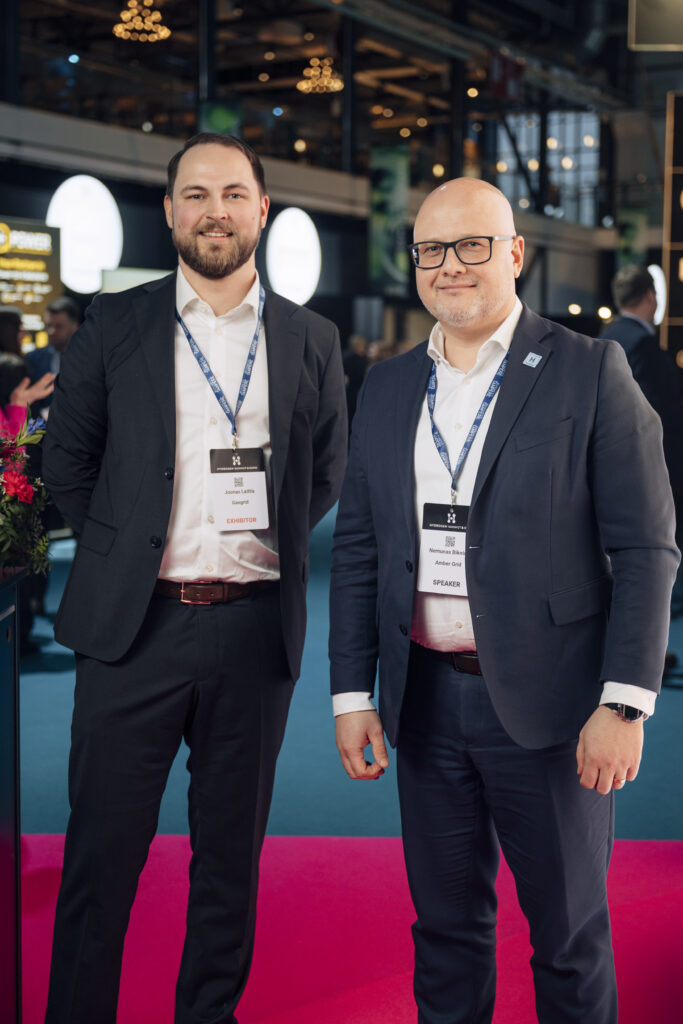
The implementation of NBHC is supported by a ‘Call for Interest’ market survey. In the survey, the project partners request information from various market participants on hydrogen production, consumption, storage, distribution, and cross-border flows in Finland, Estonia, Latvia, Lithuania, Poland, and Germany. The information will be used in the project planning.
– The target group is hydrogen producers, users, and storage experts, as well as hydrogen distribution and transport systems, Joonas Laitila said.
The information will be collected from mid-January to the end of March.
And how is the NBHC project progressing in Laitila’s opinion? – Laitila stated that the most surprising thing about the infrastructure project so far has been how smoothly everything has been rolling onwards.
– We have truly had excellent cooperation, which is only getting deeper, he stated.
Nemunas Biknius, CEO of Amber Grid, fully agreed: the gas TSOs of the six countries have found a common voice and a common will.
– Now we just have to stick to the plan, and we will succeed.
Text: Sami Anteroinen Photos: Eino Ansio
Read more: