
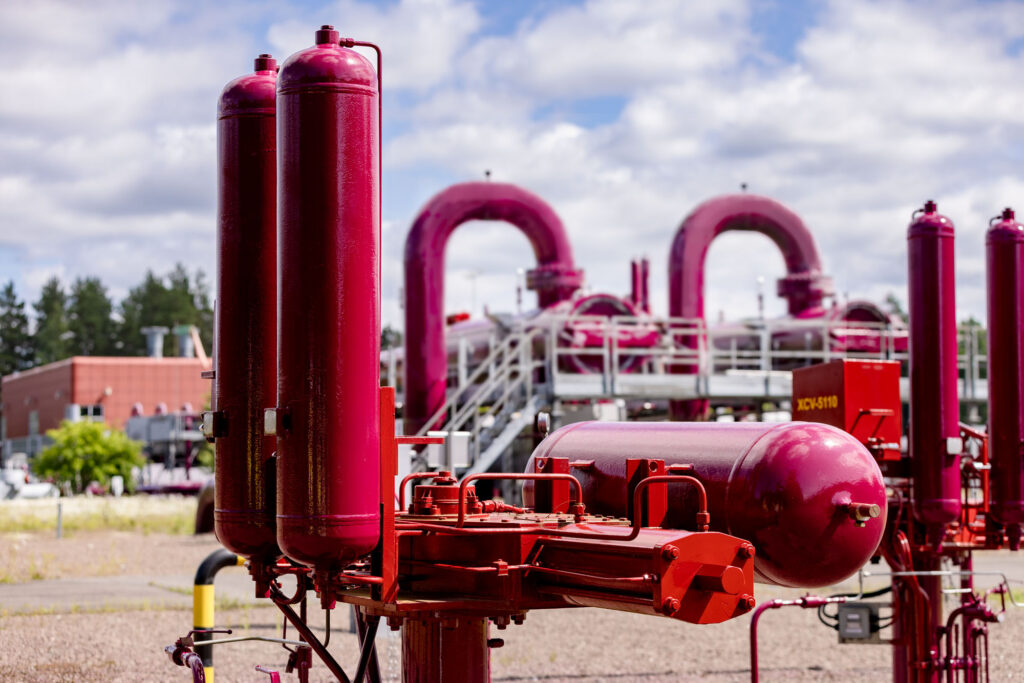
Gas transmission company Gasgrid is investigating potential expansion needs for the national methane network through a nationwide market survey related to the long-term development of the transmission network. The goal is to ensure that the transmission network will meet the future needs of Finnish industry, energy production, and new gas-related businesses.
At the end of last year, Gasgrid announced that it was investigating the expansion of the national methane transmission network to Western Finland, where demand for methane produced from domestic renewable energy and production potential are growing.
Gasgrid continues to assess expansion needs both regionally in Western Finland and nationally across the entire country. A market survey is being conducted to gauge potential producers’ and end users’ views and interest in connecting to the methane network nationwide.
–Market views play a key role in assessing network expansion needs. Through the market survey, we are mapping potential producers’ and end users’ interest and potential needs for connecting to the methane network, as well as their views on the locations, timing, and intended uses of network expansion. The results of the survey will be used to support Gasgrid’s decision-making and in the further planning of potential network expansions, says Janne Grönlund, Senior Vice President of Gas Business at Gasgrid.
The open market survey provides a comprehensive overview of the outlook for the methane market in Finland
The survey is confidential and non-binding. According to Grönlund, this is an open market survey aimed at forming a realistic and comprehensive picture of the development prospects of the methane market in Finland.
Responses to the market survey are requested by June 12, 2026.
By participating in the survey, companies and organizations are helping to highlight market needs and influence how Finland’s methane network will be developed in the future.
Further information about the survey
Henriikka Pilpola, Project Developer, henriikka.pilpola[@]gasgrid.fi
Opportunities for businesses in the natural gas market and network
- Finland’s approximately 1,150-kilometer-long natural gas network offers companies a flexible and cost-effective way to utilize gas energy and develop new business. The natural gas network provides a reliable and widely accessible transmission platform.
- By connecting gas production to the gas transmission network, gas can be injected into the national pipeline system, from which it is available at any location connected to Finland’s gas network. In addition, gas can be exported from Finland to European markets via the Balticconnector gas interconnector between Finland and Estonia, opening up new opportunities for companies in international energy trade.
- By connecting a gas end-use site to the gas transmission network, gas can be sourced from any entry point within the Finnish gas grid. In addition, gas can be imported to Finland from the European markets via the Balticconnector pipeline between Finland and Estonia, opening up new opportunities for companies to engage in international energy trade.
- The Finnish gas market offers flexible trading opportunities. Dozens of gas suppliers operate in the market, enabling diverse procurement strategies, competitive tenders, and decentralized gas procurement. In addition to bilateral trading, gas exchange trading is also an option. This market structure offers companies extensive opportunities to optimize their energy use in changing market conditions.
- Gas infrastructure enables the efficient delivery of high supply capacities. In addition, when the gas pipeline functions as linepack storage, it introduces flexibility into the system, improves the cost efficiency of gas transmission, and helps maintain a high level of security of supply. Two LNG terminals are connected to the Finnish gas system, with an energy storage capacity of approximately 1.2 TWh.
- Gas already plays a key role in Finland’s reliable overall energy system. New gas-fired power plants connected to the gas system can generate additional, rapidly adjustable, and weather-resistant energy to support renewable production. Gas engines can also support the electrification of industrial investments in locations where grid connectivity does not allow for rapid market access.
- An increasing proportion of the methane transported in the gas network is renewable gas, such as biomethane and, in the future, synthetic e-methane. This makes connecting to Finland’s gas network even more attractive for companies seeking low-carbon solutions and looking to increase their use of renewable energy.
- In summary: The gas transmission infrastructure and related market services form a comprehensive system that combines flexible energy procurement, growing opportunities for renewable energy, and access to domestic and international gas markets.